
Cardiomic did not begin as an app
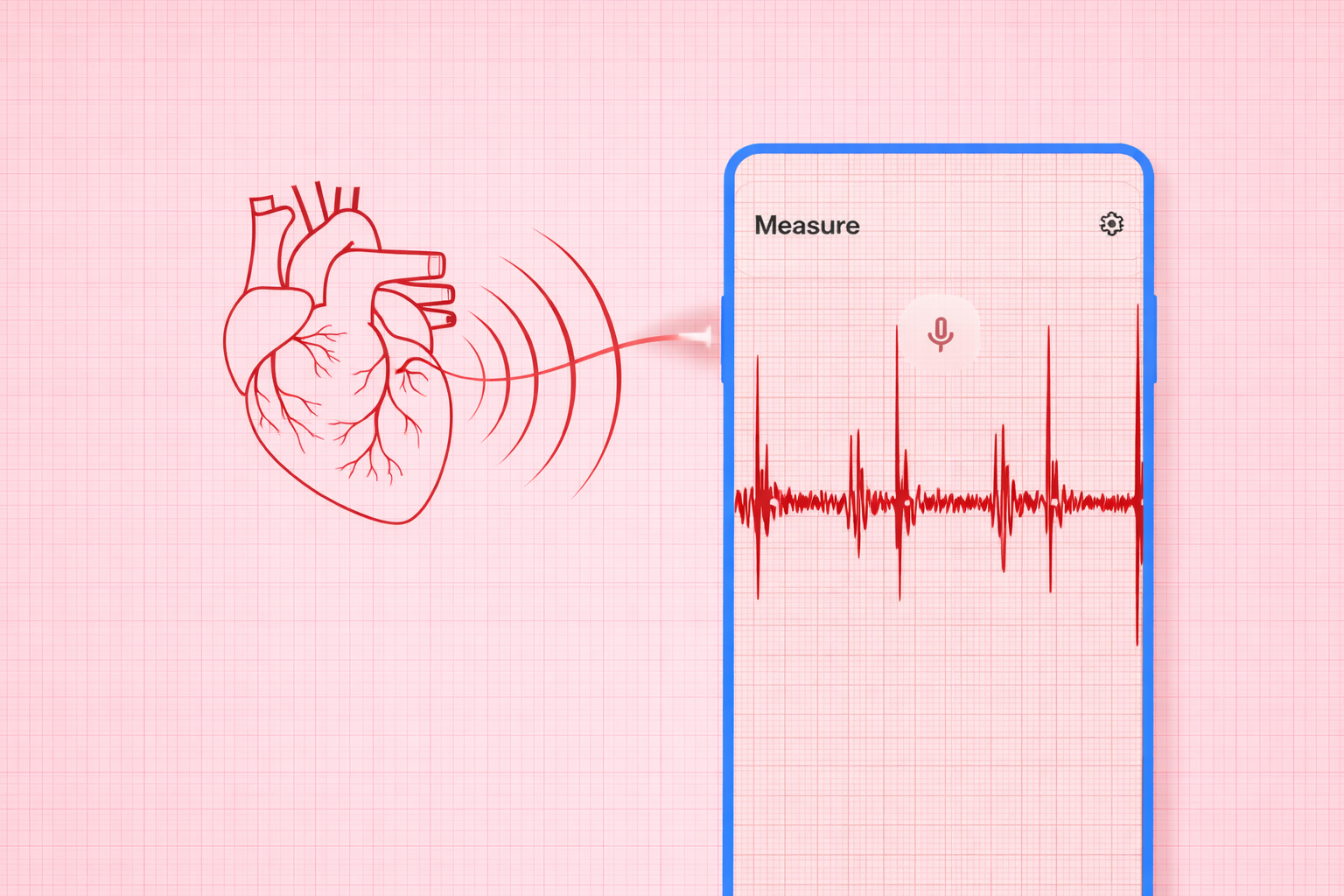
Cardiomic looks simple on the surface: place a smartphone on the chest, record heart sounds, and observe rhythm over time.
But the idea behind it is much older than the app itself.
Its origins lie in a longer technical path shaped by one persistent question: how can low-cost technology make psychophysiological observation more accessible?
That question guided years of work with heart rate variability, biosignal software, mobile sensing, and practical ways of making body signals more observable outside specialized environments. Over time, that broader path converged on a more specific challenge: could the smartphone become a simple instrument for heart observation, built around the microphone, strong design decisions, and direct access to a real signal?
The early years: low-cost psychophysiology as a research goal
Around 2008, this line of work began to take clearer form through collaboration with Prof. Dr. Emilio Takase.
The ambition was broader than heart rhythm alone. The goal was to connect physiological and behavioral signals in a low-cost environment, including heart rate variability and eye tracking, using tools that people could realistically access.
This period was defined by integration: combining software, hardware, and research methods into something robust enough for real use, without assuming expensive laboratory infrastructure from the start.
Even at this stage, one principle was already clear: meaningful observation should not remain locked inside costly or highly specialized systems.
SoftVFC: the first core instrument
One of the first major software milestones in this path was SoftVFC, an open-source project focused on heart rate variability analysis.
The work involved integration with Polar chest straps, interval-based analysis, and the implementation of measures such as SD1, SD2, and RMSSD. It also included validation efforts against other recording systems.
SoftVFC was more than a utility. It became a technical foundation for a broader family of experiments around cardiovascular biofeedback, coherence, and real-time signal interpretation. It also generated concrete research outputs, contributing to articles, academic work, and software registration efforts, including registration at INPI.
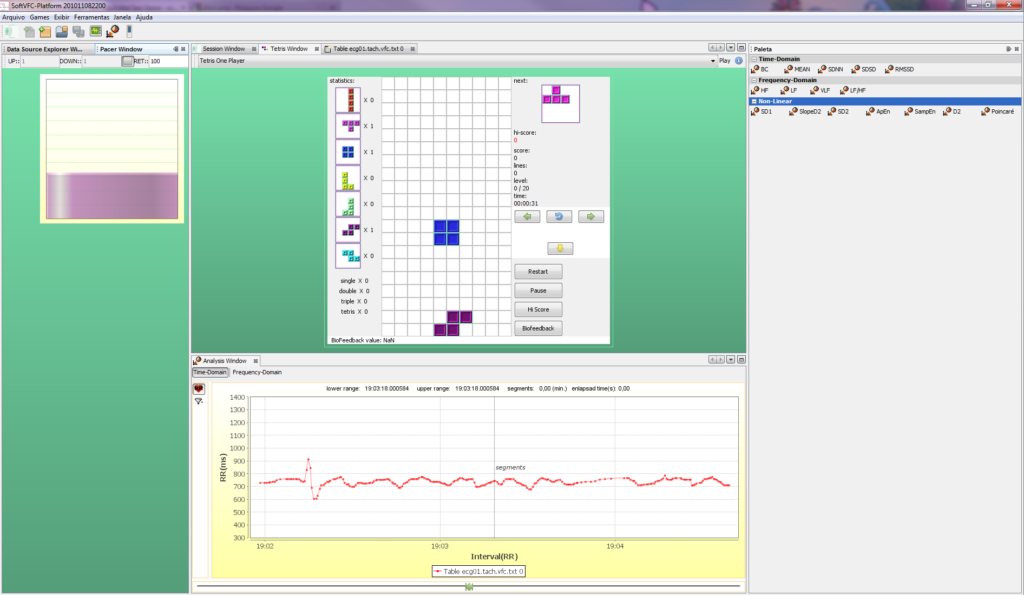
What mattered most at that stage was not polish. It was proof that low-cost signal capture and analysis could work outside traditional laboratory setups.
From broader biosignal platforms to practical simplification
As the software ecosystem matured, the work expanded beyond a single HRV tool into broader biosignal platforms and application layers.
These efforts explored multi-signal workflows, different acquisition drivers, web-based architectures, and more ambitious system designs for monitoring and integrated observation.
One important part of this phase was Biomind, an application layer that brought together different signal drivers, analytical workflows, and interface ideas. It represented an attempt to organize broader biosignal capabilities into a more integrated environment, and it remains historically relevant not only for its technical role but also for the interface direction it explored.
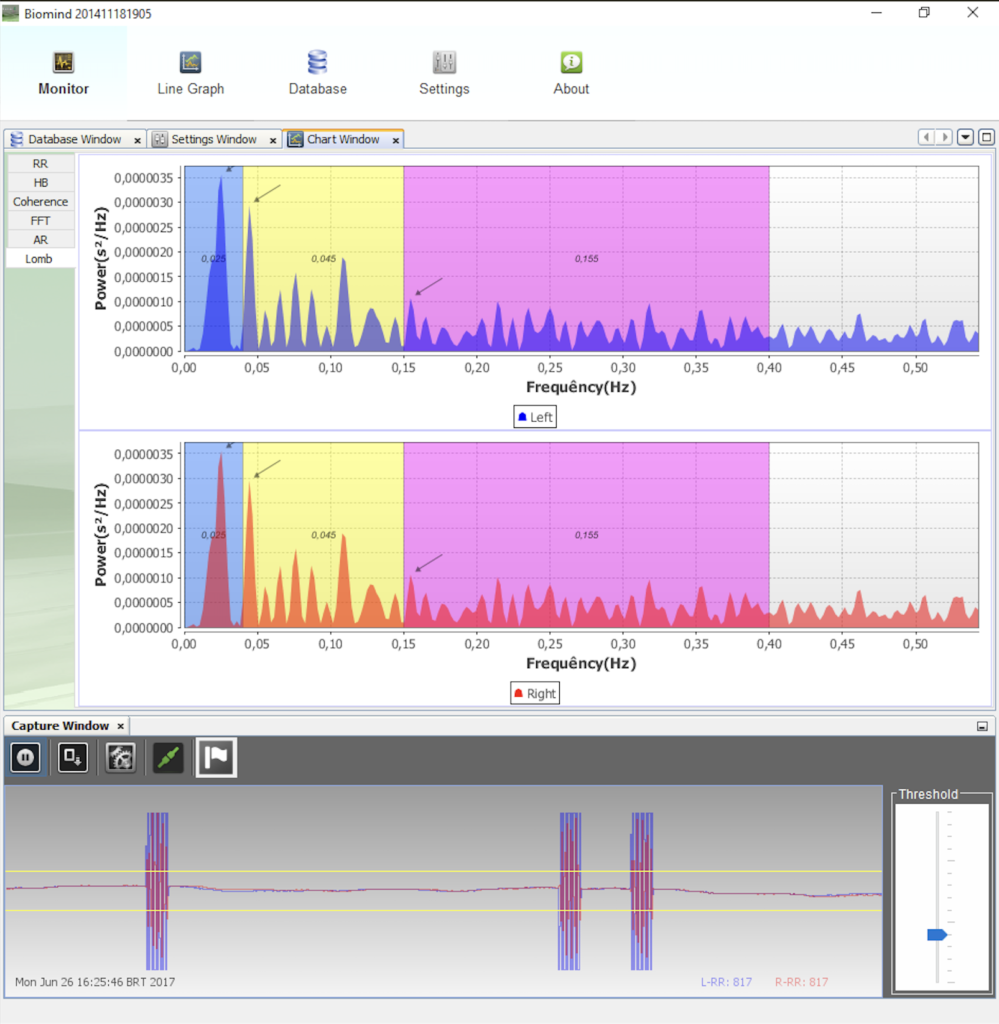
These broader platforms were technically important, but they also exposed a practical lesson: if physiological observation was going to reach everyday use, the stack had to become much simpler.
That lesson would become increasingly important in the years that followed.
Pulse marked a major shift toward smartphone heart sound capture
A decisive change came when the smartphone stopped being treated only as a display for imported data and started being treated as part of the sensing instrument itself.
This led to Pulse, a project centered on using the phone microphone to capture heart sounds and derive rhythm intervals from the acoustic signal. Pulse was released on Google Play in 2013, marking an important transition from research and experimental software into a more direct mobile instrument.
That shift changed both the economics and the accessibility of the experience.
The phone was no longer just where data appeared. It became part of how the signal was captured.
This was a major conceptual breakthrough in the path that eventually led to Cardiomic. Heart rhythm observation no longer had to begin with a chest strap or other external hardware. It also helped show that the smartphone itself could become the starting point for accessible cardiac observation.
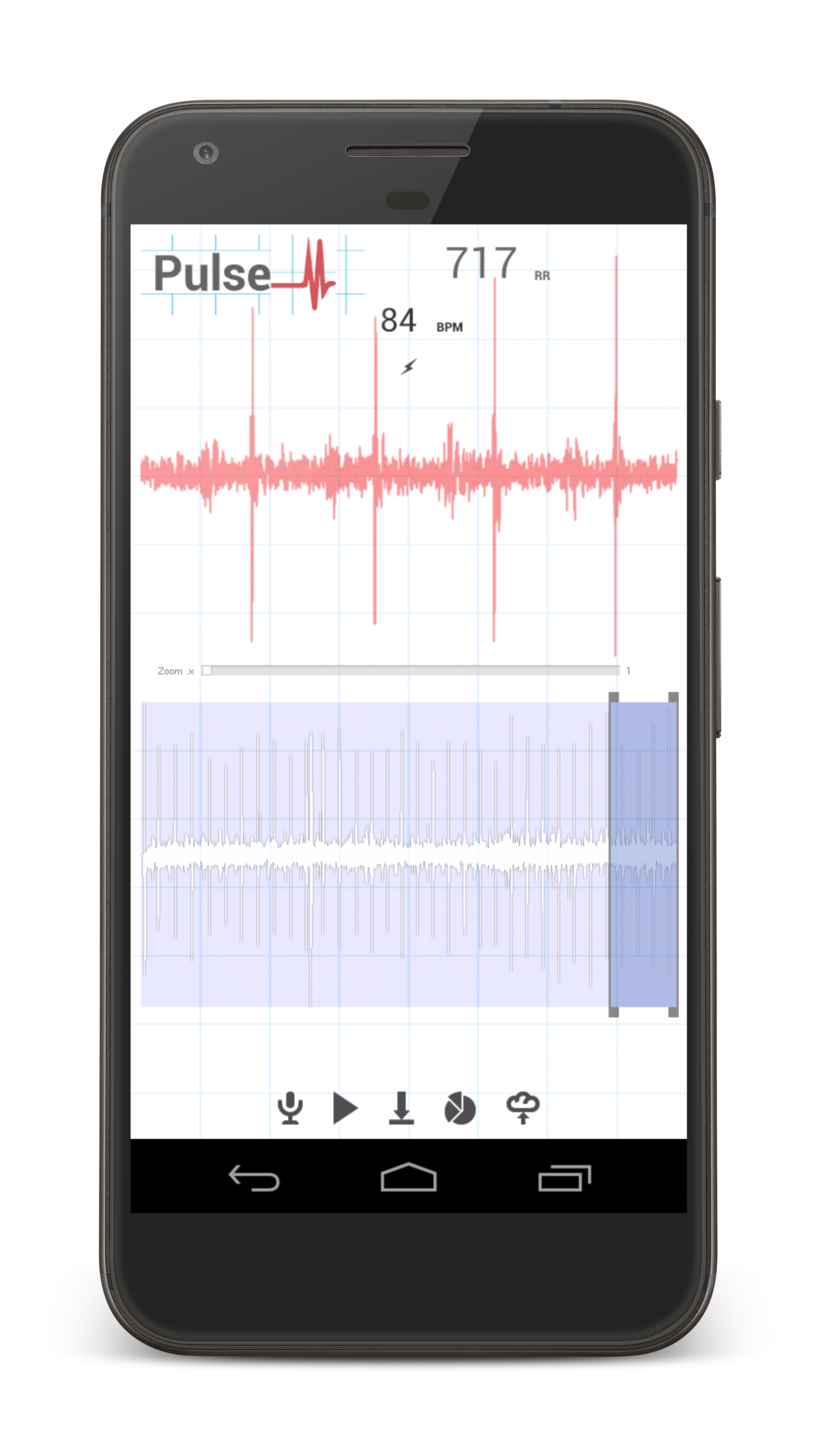
Pulse was launched on Google Play around September 2013 and reached more than 50,000 downloads. The app was removed in March 2017 after Adobe AIR, the technology used in its development, became increasingly outdated and harder to support.
Nami expanded the mobile ecosystem
If Pulse demonstrated that the smartphone could become part of the sensor, Nami explored what could be built around that idea.
Nami expanded the work into a broader mobile ecosystem that included breathing guidance, coherence-oriented views, session export, and more structured product paths.
It also pushed the platform toward hybrid models that included external accessories, broader integrations, and more specialized use cases.
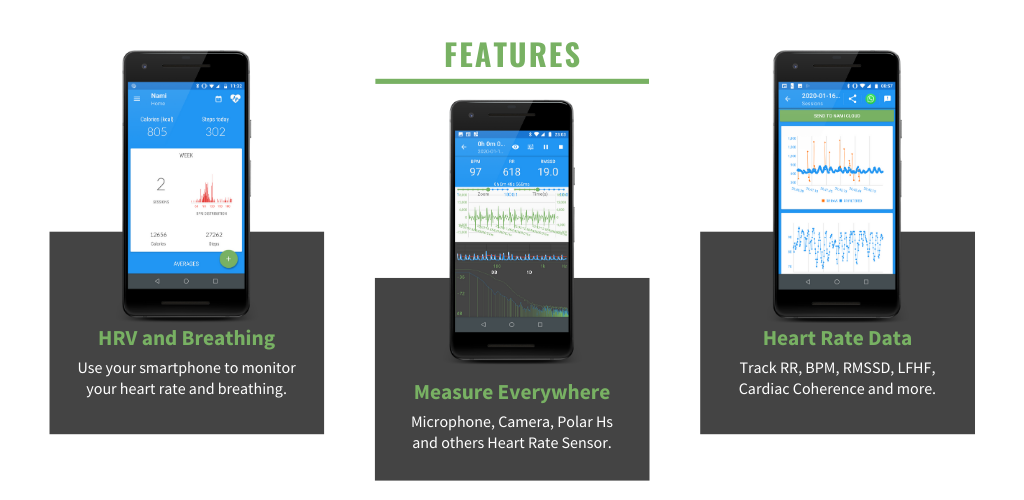
Early Nami interfaces, showing the project’s transition from mobile heart rhythm and breathing tracking to a broader physiological observation platform.
This expansion was valuable, but it clarified an important distinction: a broad physiological ecosystem is not the same thing as a focused observation instrument.
That distinction became central to Cardiomic.
Cardiomic is the distilled result of that journey
Cardiomic can be understood as the most focused expression of what was learned along the way.
It keeps the key insight that made Pulse important: a smartphone microphone can be used to capture heart sounds and reveal rhythm intervals in real time.
But it also reflects lessons learned from earlier software, broader platforms, and more expansive product directions.
Instead of trying to become a large multi-layer system, Cardiomic is deliberately focused. It centers on microphone-based signal capture, waveform visibility, RR interval observation, and session history without depending on external sensors.
In that sense, Cardiomic is not a sudden invention. It is a consolidation.
It carries forward years of experimentation in HRV analysis, biofeedback software, biosignal platforms, and mobile acquisition, while stripping the experience down to what matters most: making the signal observable, reproducible, and accessible.
This focus was not only technical. It was also a product and design decision. Cardiomic emerged from the idea that a simple instrument can be more trustworthy than a broad platform if it makes the signal easier to inspect, replay, and understand. More recently, AI became part of the development workflow as a way to accelerate iteration in interface design, clarity, and implementation, while keeping the microphone and the observable recording at the center of the product.
The scientific and institutional path mattered too
This history was not only about product evolution.
Across these projects, the work helped validate low-cost psychophysiological methods and build software that could support both experimentation and applied observation. That included interval-based analysis, non-linear HRV measures, frequency-domain views, exportable data, and workflows that could be inspected more directly.
It also produced academic and institutional outcomes. Along this path, the work contributed to articles, theses, and formal registration efforts, including intellectual property registration at INPI. There was also scientific context associated with the Laboratório de Educação Cerebral, reinforcing that these technologies were not developed only as isolated app ideas, but as part of a broader research and innovation trajectory.
This matters historically because it shows that the path behind Cardiomic was shaped not only by product iteration, but also by research activity, documentation, and formal development efforts.
Why this history matters
Many apps appear as if they arrived fully formed.
Cardiomic did not.
Its simplicity is the result of accumulated technical choices, failed paths, hardware constraints, algorithmic refinements, and repeated attempts to make heart observation more direct and more accessible.
That history matters because it explains the product’s philosophy.
Cardiomic is not trying to replace clinical systems or make diagnostic claims. It is trying to make a real physiological signal easier to record, inspect, reproduce, and revisit over time using a device people already carry.
Seen this way, the app is not just a piece of mobile software. It is the latest form of a much older idea: bringing psychophysiological observation closer to everyday life.
A long path toward a simpler tool
The story behind Cardiomic begins with complex research systems, external sensors, and experimental software stacks.
Over time, that path converged toward something much simpler: a portable tool built around the smartphone microphone for listening to the heart, seeing rhythm intervals, and observing patterns across sessions.
That simplicity did not come first. It was earned.
That history does not make the app infallible. But it does help explain why Cardiomic was built with a different philosophy: focus on one accessible signal source, make the recording inspectable and reproducible, and keep the instrument simpler than the path that led to it.
Cardiomic is available on Google Play for people who want to observe heart sounds and rhythm patterns using the smartphone as a practical instrument for self-observation.