A simple score to observe heart rhythm patterns
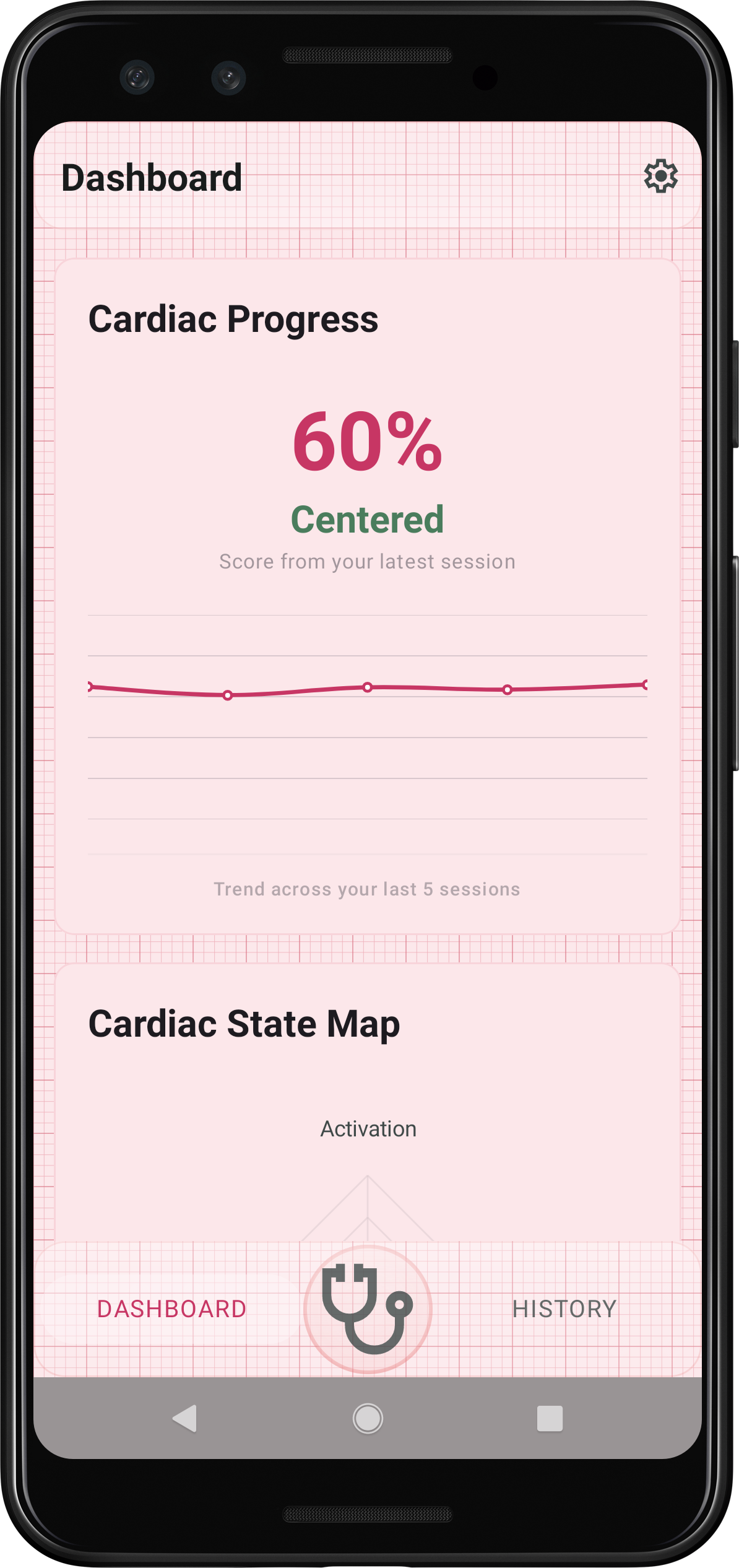
The Cardiac Progress Score is how Cardiomic transforms complex cardiac rhythm data into a simple and understandable result.
Instead of showing only heart rate, Cardiomic analyzes the timing patterns between heartbeats and summarizes this dynamic behavior into a single score from 0 to 100. This makes it easier to observe how stable, balanced, or physiologically demanding the heart rhythm appears during a measurement session.
It is not just a number. It is a practical way to visualize the dynamic behavior of the heart rhythm in real time.
A digital instrument for observing cardiac rhythm
Cardiomic was created as a digital instrument for observing physiological signals.
The Cardiac Progress Score is part of this approach. It helps translate advanced cardiac rhythm metrics into a format that can be understood without requiring technical knowledge of physiology or heart rate variability.
This allows each session to be seen not just as a BPM reading, but as a broader snapshot of the rhythm pattern of the heart at that moment.
What the score reflects
The Cardiac Progress Score combines three observable aspects of cardiac rhythm:
Heart rate
Shows how fast the heart is beating during the session.
Rhythm variability
Considers how much the interval between consecutive beats changes over time.
Physiological load pattern
Reflects whether the rhythm appears more stable and balanced or more accelerated and physiologically demanding during the recording.
These elements are combined into a single result to make session interpretation simpler and more intuitive.
A simple 0 to 100 view
The Cardiac Progress Score ranges from 0 to 100.
In general:
- higher scores reflect rhythm patterns that appear more stable and balanced during the session
- lower scores reflect rhythm patterns that appear more variable or under greater physiological load
The goal is to provide a simple overview without losing the richness of the physiological signal behind the measurement.
Cardiac rhythm states
To make interpretation easier, Cardiomic organizes the score into six states:
| Score range | Rhythm state |
|---|---|
| 85 – 100 | Very Stable |
| 70 – 84 | Stable |
| 55 – 69 | Balanced |
| 40 – 54 | Variable |
| 25 – 39 | Elevated Load |
| 0 – 24 | High Load |
These states describe how the rhythm pattern appears during the session. They do not represent a medical diagnosis.
Why this matters
The heart does not function like a fixed metronome. A healthy rhythm naturally varies from beat to beat as the body responds to internal and external conditions.
By making these patterns visible, Cardiomic helps reveal something that usually remains hidden in raw physiological data.
The Cardiac Progress Score was created to make this observation more accessible, more intuitive, and more useful for everyday tracking.
Designed for clarity
One of the main goals of the Cardiac Progress Score is to make advanced physiological information easier to understand.
Instead of exposing only technical parameters, Cardiomic offers:
- an overall session score
- a descriptive rhythm state
- supporting metrics for interpretation
This creates a better bridge between scientific measurement and real user understanding.
Important note
The Cardiac Progress Score was developed for informational and educational purposes.
It represents an interpretation of the observable dynamics of cardiac rhythm in a specific session and should not be used as a medical diagnosis or as a substitute for professional evaluation.
If you have concerns about your heart health, seek guidance from a qualified healthcare professional.