
The physiological signals behind Cardiomic
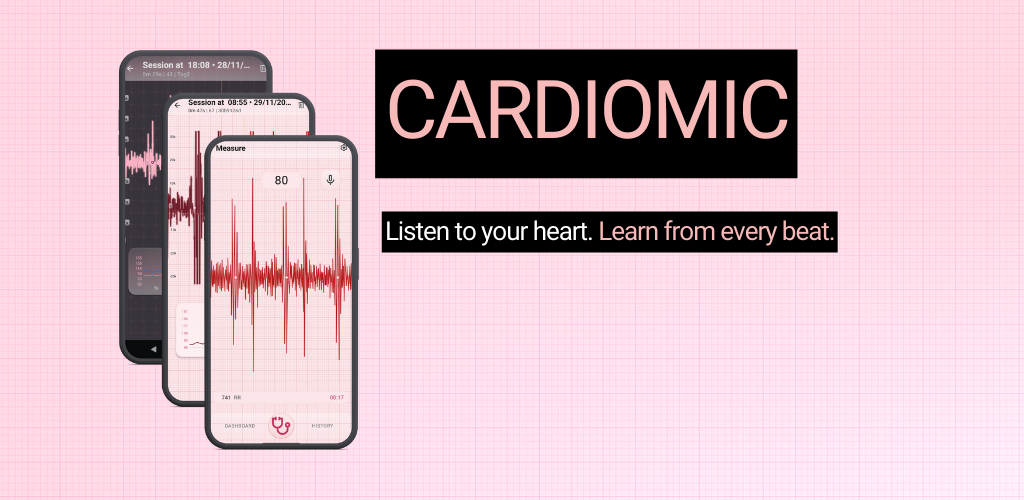
Cardiomic was designed as a digital instrument to observe heart signals using widely available technology. By recording acoustic cardiac signals with a smartphone microphone, the app can extract timing patterns that reveal aspects of cardiac rhythm.
This approach draws inspiration from established physiological measurement techniques while adapting them to modern mobile devices.
Heart sounds
The heart produces mechanical sounds as its valves open and close during each cardiac cycle. These sounds are traditionally known as S1 and S2.
These acoustic events can be captured using a stethoscope or other recording devices. Cardiomic explores the possibility of capturing similar information using the microphone of a smartphone placed close to the chest.
When the signal is sufficiently clear, the timing between consecutive heartbeats can be estimated from the detected acoustic events.
RR intervals
One of the most informative aspects of cardiac rhythm is the timing between consecutive heartbeats, often referred to as RR intervals.
Rather than beating with perfect regularity, the heart naturally changes its timing from beat to beat. These variations reflect the interaction between multiple physiological systems, including the autonomic nervous system and respiration.
By estimating these intervals, Cardiomic can observe rhythm patterns that go beyond a simple heart rate measurement.
Rhythm patterns
The heart does not operate like a fixed metronome. Instead, its rhythm continuously adapts to internal and external conditions.
Patterns observed in heartbeat timing can provide insights into physiological states such as relaxation, stress, or physical demand.
Cardiomic focuses on making these rhythm patterns more visible and easier to interpret through signal-based measurements.
Signal-centered measurement
Many consumer heart rate applications rely on optical measurements using the phone camera. Cardiomic takes a different approach by focusing on acoustic signals generated by the heart.
This signal-centered perspective allows the observation of heartbeat timing and rhythm dynamics in a way that is closer to traditional cardiac auscultation techniques.
Although smartphone recordings cannot replace medical instruments, they can provide a useful window into the behavior of cardiac rhythm.
A tool for observation
Cardiomic was created to help make physiological signals more observable. By translating raw acoustic signals into interpretable rhythm patterns, the app offers a new way to explore the dynamics of the heart.
The intention is not to provide medical diagnosis, but to support observation, learning, and curiosity about how the heart behaves in everyday situations.
Important note
Cardiomic is intended for informational and educational purposes. It is not a medical device and should not be used as a substitute for professional medical evaluation.
If you have concerns about your heart health, seek guidance from a qualified healthcare professional.